 Rate top games
Reviews
Display options:
This is a solid 7/10. It has its issues, but in the end, you're going to love it. But let's start with the bad stuff.
9/10, 80% ratings? People say this could be Game of the Year. I have a (bad) feeling that people say this only because this is the best Star Wars game in years. Compared to everything previous this is an awesome game - compared to other productions in the past year, this is more like a 6/10. Maybe 6,5/10 (fix some bugs, textures and I've give it 7/10). You know this feeling, when you've spend last couple of years getting kicked in the back, and you feel relieved when finally something nice happens to you, even if it's a very small thing, and you feel extremely happy? I guess this is the reason for higher scores by the reviewers and players.
This game is not meant for casual players - even the "story mode" difficulty will cause you a lot of trouble. Like when you play games to deal with your anxiety, this game will induce your anxiety. Like when a lot of games give you puzzle to solve and you feel the rush of dopamine after you solve them, in this game you're simply glad the puzzle is over.
There are outdated mechanics. Seriously, a health bar in 2019? It's fine, I get it, but it's not something for casual players who want to enjoy the story. And checkpoints... In most modern games, you know you can safely leave the game (intentionally, or when the power goes off) and your progress will be saved. Not this game - Fallen Order uses checkpoints, that you need to manually interact with. I didn't know that - so the next day I had to replay nearly an hour of the same stuff. And there were cutscenes within this hour - cutscenes that cannot be skipped.
Speaking of the same stuff - once you're done with one planet, you travel to the next, and then the game tells you need to go back to the first one. There, you fight with all... the... same... enemies... in... the... same... places, in... the... same... numbers. Oh, and no fast travel - you have to walk all the way back.
Console version has issues, like textures loading very slowly, or not loading at all. Graphically this is a game from 2010. The way the wookies look? Oh my...
The game is nice. There's awesome music! It looks nice (just not 2019 nice), and there's some nice humor, lightsaber combat is awesome, and it's one of the best Star Wars games of the XXI century, Respawn did a really, really great job! After you get used to outdated mechanics it's pretty fun to play. But not GOTY, nor 9/10 - it's the best SW game of the decade, sure, just not the best game of the year compared to other modern productions.
And it's difficult. Don't fall into the "story mode" difficulty setting trap - it's still difficult, mainly because the mechanics and control's react time is far from perfect. If you're a person who gets angry when you pay a lot of money for a game and it only makes you feel like crap, Fallen Order is not for you. If a game you bought makes you wanna sell it after a couple of hours of playing, the game is not for you. Fallen Order is a game for a bunch of hardcore players and hardcore players only.
Keep that in mind before you buy it.
Now, the good stuff, which basically makes you forgive everything I mentioned earlier - this is the best SW game in the last 10 years. Despite technical problems and the overall feeling of "could use one more year in development", this is a greatadventure that is enjoyable to play and once you get to the very end and final boss, you're going to enjoy it very much. It's a great Star Wars adventure that will make you think "it's too short" and "when can I pre-order the sequel". The final sequence is a masterpiece with the characters, visuals, gameplay and music.
So in the end, while this isn't a game of the year, isn't very easy, and is troubled by technical and story issues, Respawn did a hell of a job.
9/10, 80% ratings? People say this could be Game of the Year. I have a (bad) feeling that people say this only because this is the best Star Wars game in years. Compared to everything previous this is an awesome game - compared to other productions in the past year, this is more like a 6/10. Maybe 6,5/10 (fix some bugs, textures and I've give it 7/10). You know this feeling, when you've spend last couple of years getting kicked in the back, and you feel relieved when finally something nice happens to you, even if it's a very small thing, and you feel extremely happy? I guess this is the reason for higher scores by the reviewers and players.
This game is not meant for casual players - even the "story mode" difficulty will cause you a lot of trouble. Like when you play games to deal with your anxiety, this game will induce your anxiety. Like when a lot of games give you puzzle to solve and you feel the rush of dopamine after you solve them, in this game you're simply glad the puzzle is over.
There are outdated mechanics. Seriously, a health bar in 2019? It's fine, I get it, but it's not something for casual players who want to enjoy the story. And checkpoints... In most modern games, you know you can safely leave the game (intentionally, or when the power goes off) and your progress will be saved. Not this game - Fallen Order uses checkpoints, that you need to manually interact with. I didn't know that - so the next day I had to replay nearly an hour of the same stuff. And there were cutscenes within this hour - cutscenes that cannot be skipped.
Speaking of the same stuff - once you're done with one planet, you travel to the next, and then the game tells you need to go back to the first one. There, you fight with all... the... same... enemies... in... the... same... places, in... the... same... numbers. Oh, and no fast travel - you have to walk all the way back.
Console version has issues, like textures loading very slowly, or not loading at all. Graphically this is a game from 2010. The way the wookies look? Oh my...
The game is nice. There's awesome music! It looks nice (just not 2019 nice), and there's some nice humor, lightsaber combat is awesome, and it's one of the best Star Wars games of the XXI century, Respawn did a really, really great job! After you get used to outdated mechanics it's pretty fun to play. But not GOTY, nor 9/10 - it's the best SW game of the decade, sure, just not the best game of the year compared to other modern productions.
And it's difficult. Don't fall into the "story mode" difficulty setting trap - it's still difficult, mainly because the mechanics and control's react time is far from perfect. If you're a person who gets angry when you pay a lot of money for a game and it only makes you feel like crap, Fallen Order is not for you. If a game you bought makes you wanna sell it after a couple of hours of playing, the game is not for you. Fallen Order is a game for a bunch of hardcore players and hardcore players only.
Keep that in mind before you buy it.
Now, the good stuff, which basically makes you forgive everything I mentioned earlier - this is the best SW game in the last 10 years. Despite technical problems and the overall feeling of "could use one more year in development", this is a greatadventure that is enjoyable to play and once you get to the very end and final boss, you're going to enjoy it very much. It's a great Star Wars adventure that will make you think "it's too short" and "when can I pre-order the sequel". The final sequence is a masterpiece with the characters, visuals, gameplay and music.
So in the end, while this isn't a game of the year, isn't very easy, and is troubled by technical and story issues, Respawn did a hell of a job.
Loved it. It certainly not for everyone but I think in terms of walking simulators it might be the peak of the genre thanks to lots of interesting mechanics and details that keep the act of getting from A to B very engaging. Whats great as well is how the design of the game ties into the story and it's themes of isolation and rebuilding society to connect again. A very contemporary piece, it's not subtle with its themes but commits to them wholeheartedly and pulls them off with a great deal of success if not always perfectly.
If I have any major complaints it's that the enemies, both human and BT loose there menace when you figure out how they work and I do wish the side content was fleshed out a bit more.
If I have any major complaints it's that the enemies, both human and BT loose there menace when you figure out how they work and I do wish the side content was fleshed out a bit more.
«Sit back and relax»
«That ending!»
If I have to eat one more science project passed off as food in this sprat fucked colony, I'm going to stab someone.
It's Fallout in space, it's just good. Go buy it or redbox it or whatever.
Not a fan. I bought this because it was on sale and Career Mode for FIFA20 is a shit show.
This game just feels weird. I'm going to give it some more time and will update review accordingly.
«Waste of time»
Okay so, definitely spoilers ahead.
So let's start at the beginning, a new playable character? HELL YES.. oh wait, there are two new playable characters ... oh no wait, there are fucking 3! Honestly though, I love the new characters, the only gripe I have is Taiga's fighting style just seems so basic and mehhh, I do like that he hits like a tank though.
This game is much improved when you transition from 3 to 4, visually, gameplay wise, etc...
Voice acting and music is of course exceptional, which is to be expected and the story is IMO much better than 3. I'd say of the games I've played so far, this has the second best story, behind 2. I've yet to play 5+6 though.
You can finally play pachinko in that Volcano building, and if you could do it before then rip because I'd been wanting to go in there since the first time I saw it. Also plenty of minigames and other things to do as always and plenty of side quests.
Lastly before I wrap this up, what an ending this game has. I clocked in at just over 18 hours for the main story and will probably easily double that going back and doing all of the side quests and other various activities.
So final verdict, if you like the Yakuza series then I don't need to sell you on this one but if you're reading this for whatever reason and haven't played the games before, go pick up the 0+1+2 collection and buckle up for a hell of a ride.
I'm bummed that 5 isn't getting it's PS4 release until February.
«Can’t stop playing»
«That ending!»
Some games are enhanced by an amazing soundtrack, some games (like Sayonara Wild Hearts) are so intertwined with their soundtrack it'd be impossible to separate the two, and some games, if you took away the soundtrack, would leave very little behind.
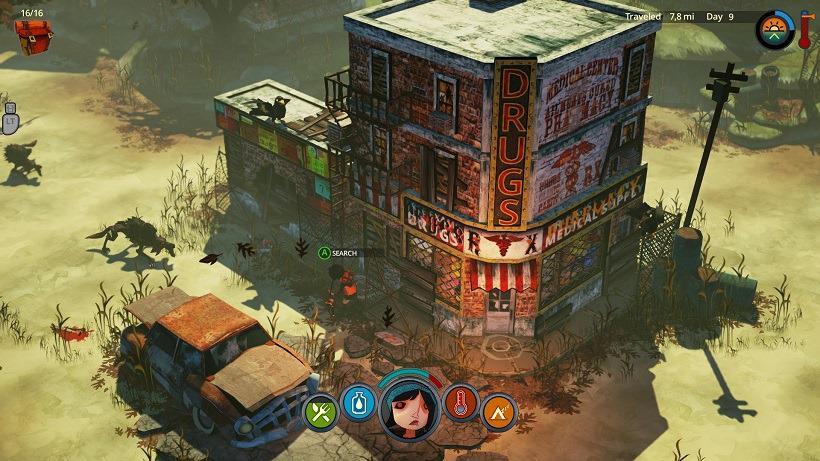 The Flame in the Flood is a survival game through and through (think Don't Starve and you've got 90% of the idea) with the gameplay revolving around keeping your character's four gauges - Food, Hydration, Temperature and Shelter - constantly topped up to avoid death.
On paper the big innovation to the formula is how the game is split into distinct two parts: your standard scavenging for items and crafting takes place on small islands, but to get from one island to the next you have to navigate the rapids and obstacles of this flooded world on your upgradable raft.
That's on paper though - in reality the big unique thing this game has going for it is its atmosphere, and that's where the music plays such a crucial role. The game's artstyle is pretty great, with its buildings dripping in ramshackle Americana and its lo-fi character and animal models having an almost other-worldly feeling (Your character in particular is slightly unnerving in a special kind of way reminiscent of Coraline) but it's Chuck Ragan's FANTASTIC Folk music soundtrack that breathes life into this damp, post-societal world. Time spent cruising down through the backwaters to one of the rare - but all the more impactful for it - vocal tracks is easily the highest high point the game has to offer.
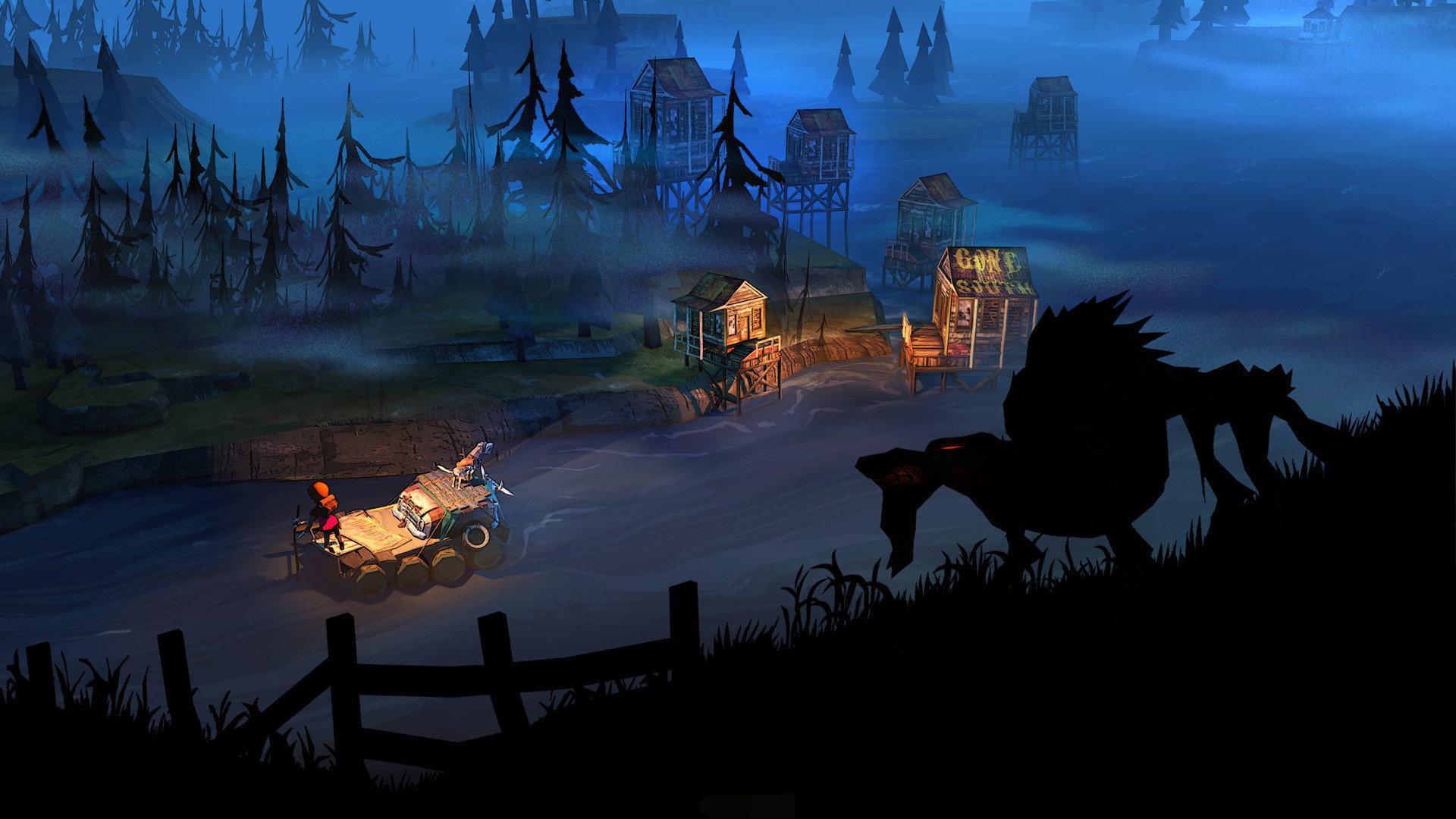 Like many survival games The Flame in the Flood is - at it's core - a game about inventory management and, unfortunately for something you spend the majority of your time doing, it's a bit of a ball-ache. The frustrating part, though, is that it didn't NEED to be. So many design choices seem to have been made simply to increase the time you spend in the menus.
Your inventory is tiny at the start of the game, to the point it'll probably be filled after the first two islands (and this is AFTER it was doubled in a patch). Picking up or crafting anything after that requires shifting things manually to your dog's separate inventory. You're never apart from your dog so there's no real reason to separate the two inventories and you can't even send him to pick up items directly when your inventory is full - a feature that I'm finding extremely useful in Fate, a (15 year old!) game that I'm playing at the same time.
You instead have to transfer an item to the dog to make room, pick up the new item, transfer back the old item, then finally move the new item to the dog (making sure you keep one free square the whole time to give you space to move things). The only upside to this cumbersome system is that finding an inventory expanding pouch in game actually feels like the astounding reward it's meant to be.
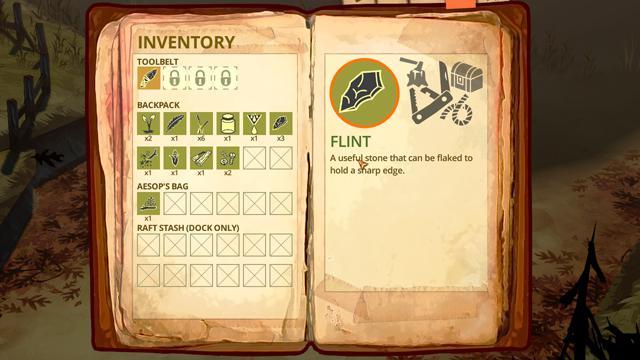 There's also the problem of the "hold to interact" prompts that plague so many modern games. It's not as bad as, say, No Man's Sky (moving inventory items doesn't require holding, thank god) but it's still mostly backwards from what you'd expect: easily cancel-able actions like looting crates and sitting at a fire need a hold but crafting an item, which I'd expect to be a hold until the progress bar fills, is a single press. Then, in the very rare occasions you meet another living human, you can accidentally skip entire pages of dialogue (and agree to who-knows-what) if you hold the button longer than a millisecond.
That's a shame because there's very little writing in the game and, between the quilts and rare NPCs, everything you DO find is written in an appealing writing style that fits the setting and makes the tiniest piece of text feel like a refreshing aside.
One reason I can think of for why the game is so insistent that you hold buttons down is that the world doesn't pause when you're in menus, meaning that any time spent looting or reorganizing your bag is time that things can go wrong in an INSTANT. I underestimated the danger of a boar being in the general vicinity as I crafted items and after a broken bone, two lacerations, and having to use up all my hard earned healing items I definitely didn't make that mistake again.
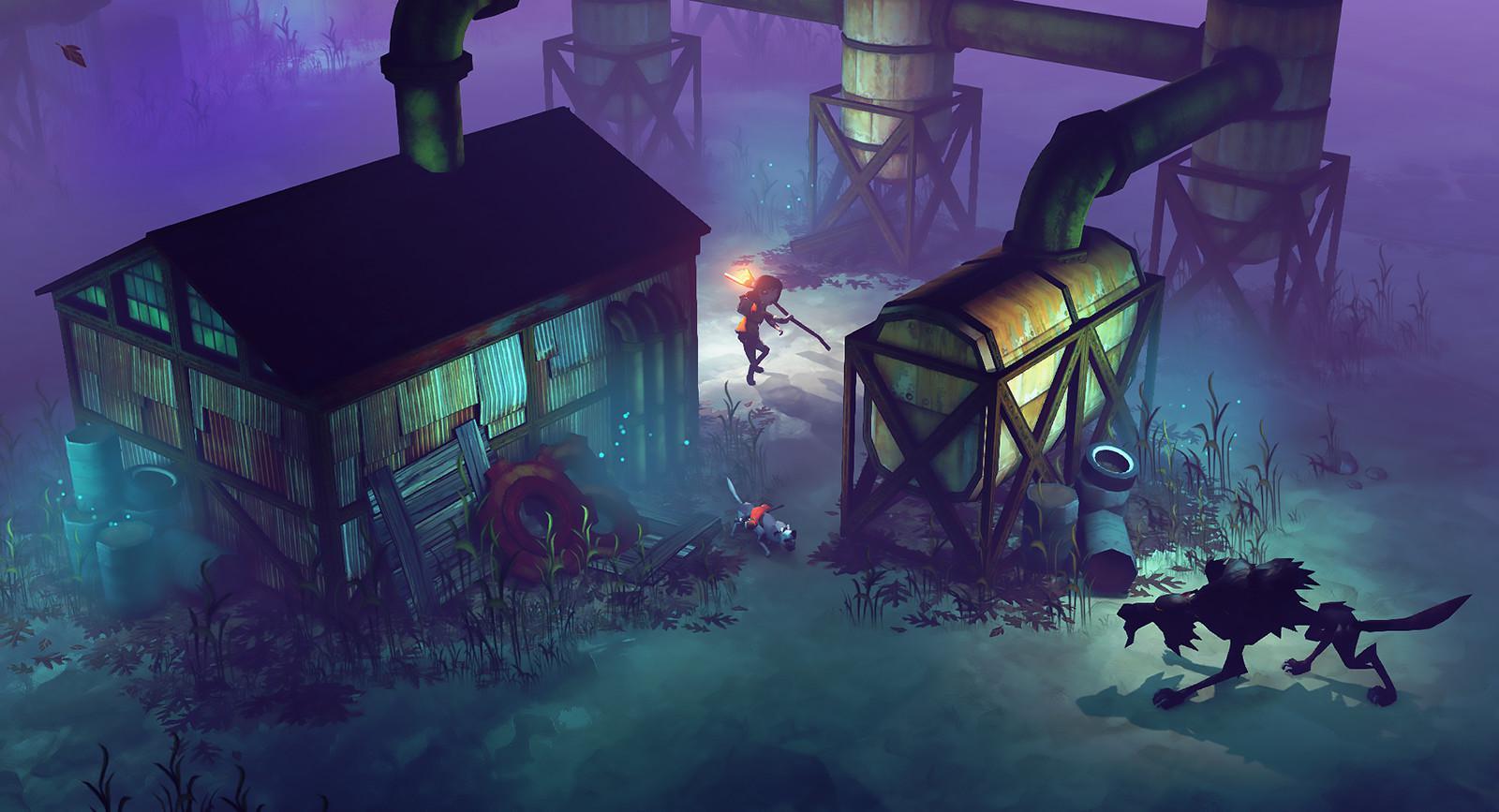 Wildlife in general is surprisingly dangerous for a game without any actual combat so to speak of. My first run was ended by a single snake bite because I couldn't find clean water in time to craft a cure for it (although that earlier boar sure didn't help) and that's when the game really decided to surprise me by offering to restart me from an earlier checkpoint.
There'd been no mention of saving (either automatically or an option to manual save) and everything about the game's set-up (the genre, the randomly generated islands, and the dog carrying over items from a nameless skeleton) had made me think it was going to be a perma-death roguelike experience. That did turn out to be an optional setting for hard or endless modes but I'm very glad it wasn't a case of having to redo everything from scratch because runs in this game are LONG - at least 10 hours before I first saw credits.
The game is split into 10 distinct areas and (after starting out deep in the countryside) the third sees you ride the currents into ruined cities and urban sections which, despite being gorgeous to look at, are too large. Every single island starts to take such a long time to explore when there are so many cars and houses to loot and around the fifth region it all started getting a bit too routine, with nothing new being introduced to keep up variety.
Luckily area 5/10 isn't the halfway point of the game (as you'd be forgiven for assuming) and the latter leg of the game is punctuated with short story-based segments, so the island-hopping never gets a chance to feel too long in the tooth, but by this point I was so well stocked with items on my little floating home that stopping at ANY island felt like more of a risk than it was worth, leaving my last few hours confined almost entirely to the rafting half of the gameplay.
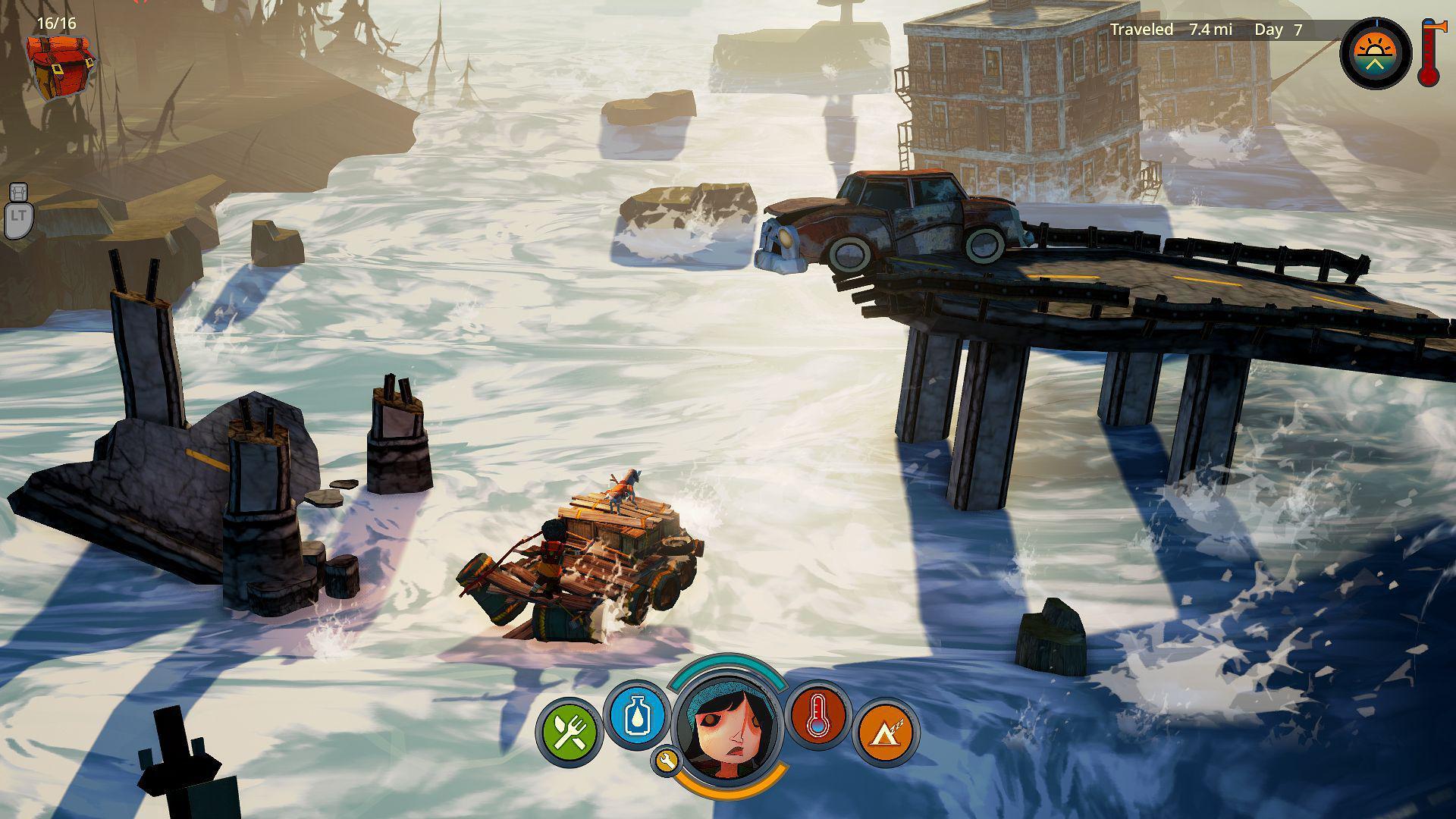 Unfortunately, as with any time spent on the US backwaters, there's also a fair amount of bugs.
Crafting things in a certain order with rabbits in your inventory that lets you make a pouch from their skins before skinning them (and therefore not using any materials). The free inventory upgrade is much appreciated but probably not intended.
As often as not when I disembarked the raft my stick and pack would duplicate themselves and float on back in mid-air and the raft is also a deceptively dangerous ride; getting caught on a single obstacle and being unable to steer away because of the current can leave you smashing into it over and over with no way to break free.
When you hear a thunderstorm coming and run to shelter to sleep it out you'll often wake up and walk back outside only for the rain to last just a millisecond before it becomes sunny again but completely drench you anyway, like you'd been trying to avoid by seeking shelter in the first place.
Upgrading your starting clothes unequips them without telling you - best hope you're paying attention or your newly insulated boots won't do much to stop you freezing while you walk around barefoot.
Most of those are easy enough to overlook but, as bad luck would have it, the worst one came right at the end of the game. Having the quick menu open as you enter the final area's cutscene trigger makes you lose all control of your raft which (combined with a manically flickering horizon) steals all impact from what should be a fantastic moment of finally hearing the game's climactic title track and then leaves you stranded, unable to dock, right before the end of the game. After rebooting the game and going through the unskippable cutscene a second time I found out it'd locked up in what was literally the final MINUTE of the game.
The Flame in the Flood has a beautifully unique atmosphere (excepting the possible contender, Where the Water Tastes Like Wine), and lots of heart serves as a charming distraction from mundane gameplay, but the jankiness and repetition wear it down long before the game draws to a close.
On paper the big innovation to the formula is how the game is split into distinct two parts: your standard scavenging for items and crafting takes place on small islands, but to get from one island to the next you have to navigate the rapids and obstacles of this flooded world on your upgradable raft.
That's on paper though - in reality the big unique thing this game has going for it is its atmosphere, and that's where the music plays such a crucial role. The game's artstyle is pretty great, with its buildings dripping in ramshackle Americana and its lo-fi character and animal models having an almost other-worldly feeling (Your character in particular is slightly unnerving in a special kind of way reminiscent of Coraline) but it's Chuck Ragan's FANTASTIC Folk music soundtrack that breathes life into this damp, post-societal world. Time spent cruising down through the backwaters to one of the rare - but all the more impactful for it - vocal tracks is easily the highest high point the game has to offer.
Your inventory is tiny at the start of the game, to the point it'll probably be filled after the first two islands (and this is AFTER it was doubled in a patch). Picking up or crafting anything after that requires shifting things manually to your dog's separate inventory. You're never apart from your dog so there's no real reason to separate the two inventories and you can't even send him to pick up items directly when your inventory is full - a feature that I'm finding extremely useful in Fate, a (15 year old!) game that I'm playing at the same time.
You instead have to transfer an item to the dog to make room, pick up the new item, transfer back the old item, then finally move the new item to the dog (making sure you keep one free square the whole time to give you space to move things). The only upside to this cumbersome system is that finding an inventory expanding pouch in game actually feels like the astounding reward it's meant to be.
That's a shame because there's very little writing in the game and, between the quilts and rare NPCs, everything you DO find is written in an appealing writing style that fits the setting and makes the tiniest piece of text feel like a refreshing aside.
One reason I can think of for why the game is so insistent that you hold buttons down is that the world doesn't pause when you're in menus, meaning that any time spent looting or reorganizing your bag is time that things can go wrong in an INSTANT. I underestimated the danger of a boar being in the general vicinity as I crafted items and after a broken bone, two lacerations, and having to use up all my hard earned healing items I definitely didn't make that mistake again.
There'd been no mention of saving (either automatically or an option to manual save) and everything about the game's set-up (the genre, the randomly generated islands, and the dog carrying over items from a nameless skeleton) had made me think it was going to be a perma-death roguelike experience. That did turn out to be an optional setting for hard or endless modes but I'm very glad it wasn't a case of having to redo everything from scratch because runs in this game are LONG - at least 10 hours before I first saw credits.
The game is split into 10 distinct areas and (after starting out deep in the countryside) the third sees you ride the currents into ruined cities and urban sections which, despite being gorgeous to look at, are too large. Every single island starts to take such a long time to explore when there are so many cars and houses to loot and around the fifth region it all started getting a bit too routine, with nothing new being introduced to keep up variety.
Luckily area 5/10 isn't the halfway point of the game (as you'd be forgiven for assuming) and the latter leg of the game is punctuated with short story-based segments, so the island-hopping never gets a chance to feel too long in the tooth, but by this point I was so well stocked with items on my little floating home that stopping at ANY island felt like more of a risk than it was worth, leaving my last few hours confined almost entirely to the rafting half of the gameplay.
Crafting things in a certain order with rabbits in your inventory that lets you make a pouch from their skins before skinning them (and therefore not using any materials). The free inventory upgrade is much appreciated but probably not intended.
As often as not when I disembarked the raft my stick and pack would duplicate themselves and float on back in mid-air and the raft is also a deceptively dangerous ride; getting caught on a single obstacle and being unable to steer away because of the current can leave you smashing into it over and over with no way to break free.
When you hear a thunderstorm coming and run to shelter to sleep it out you'll often wake up and walk back outside only for the rain to last just a millisecond before it becomes sunny again but completely drench you anyway, like you'd been trying to avoid by seeking shelter in the first place.
Upgrading your starting clothes unequips them without telling you - best hope you're paying attention or your newly insulated boots won't do much to stop you freezing while you walk around barefoot.
Most of those are easy enough to overlook but, as bad luck would have it, the worst one came right at the end of the game. Having the quick menu open as you enter the final area's cutscene trigger makes you lose all control of your raft which (combined with a manically flickering horizon) steals all impact from what should be a fantastic moment of finally hearing the game's climactic title track and then leaves you stranded, unable to dock, right before the end of the game. After rebooting the game and going through the unskippable cutscene a second time I found out it'd locked up in what was literally the final MINUTE of the game.
The Flame in the Flood has a beautifully unique atmosphere (excepting the possible contender, Where the Water Tastes Like Wine), and lots of heart serves as a charming distraction from mundane gameplay, but the jankiness and repetition wear it down long before the game draws to a close.
«Buggy as hell»
Code Vein is a real masterpiece of soulsborne clons. Great game.
«Blew my mind»
«Just one more turn»
This is a review of the single player campaign. The first half of it was fun. Fighting in the urban environments during the first few missions with civilians to watch out for were a nice change. Towards the end it'll be more of the same gauntlet with increasing numbers of infinite enemies that we've seen since the original Modern Warfare. Sometimes there is a small change in the gameplay to vary it a bit, but usually these instances are also heavily scripted.
The graphics and audio are good. There are some annoying bugs mostly regarding graphics, but running everything on the highest setting is not a requirement for me, so they didn't really bother me much. The voice acting is good, the music easily forgettable.
The story is good enough and doesn't get boring, but I feel like it's missing something. There are no intense, memorable highlights, but some of the main characters are interesting. If you've liked the previous titles of the series, this is a pretty safe bet.
The graphics and audio are good. There are some annoying bugs mostly regarding graphics, but running everything on the highest setting is not a requirement for me, so they didn't really bother me much. The voice acting is good, the music easily forgettable.
The story is good enough and doesn't get boring, but I feel like it's missing something. There are no intense, memorable highlights, but some of the main characters are interesting. If you've liked the previous titles of the series, this is a pretty safe bet.
Favorite Thing: It's a solid Fallout-like that doesn't overstay its welcome.
Least Favorite Thing: The game is a cake walk on normal. And that 100% crash near the end.
Date Completed: 2019-11-15
Playtime: 19h
Enjoyment: 8/10
Recommendation: Definitely.
one of the best visual novel games out there, the music is a 10/10, writing is an 11/10 but the ending was very sudden, highly recommend
«Blew my mind»
«Can’t stop playing»
First half is one of the best games ive ever played, the minute you get to the ship, stop playing
«Blew my mind»
Best game ever.
You remember in Fallout and Wasteland games where your actions had consequences, people remembered what you did to them and their friends, and the writing made everyone morally grey so that deciding on who to help made you take pause and think for a while before choosing a course of action? The Outer Worlds is such a game.
This game does not shove politics in your face, but takes the time to think a little more deeply about the world. It's not an anti-capitalism screed, as even the arch-capitalists have good qualities to balance out their characters. Spacer's Choice isn't a bastion of freedom, but it's not necessarily a power for evil either. The game's universe is a Feudal society, with the corporations acting as Lords who control the serfs under them and grudgingly accept the free men and women who pad out the world.
It's a game full of shades of grey which offers future gameplay with actual divergent pathways, instead of black marks and gold stars doled out by the game's writers when you follow their arbitrarily decided upon good and evil actions.
You are your own judge, jury, and executioner in this game, as only you are responsible for your decisions in a world where all options are on the table and often morally ambiguous.
This game does not shove politics in your face, but takes the time to think a little more deeply about the world. It's not an anti-capitalism screed, as even the arch-capitalists have good qualities to balance out their characters. Spacer's Choice isn't a bastion of freedom, but it's not necessarily a power for evil either. The game's universe is a Feudal society, with the corporations acting as Lords who control the serfs under them and grudgingly accept the free men and women who pad out the world.
It's a game full of shades of grey which offers future gameplay with actual divergent pathways, instead of black marks and gold stars doled out by the game's writers when you follow their arbitrarily decided upon good and evil actions.
You are your own judge, jury, and executioner in this game, as only you are responsible for your decisions in a world where all options are on the table and often morally ambiguous.
«Can’t stop playing»
It's a good old Ratchet & Clank game well rebooted, the new graphics look amazing and it's very entertaining. It felt kind of short to me.
I know it doesn't feel like a proper Just Cause game, and I know it's aged like a McDonald's milkshake, but it's still a good game and it's only short, so it's worth playing if you want the B-est of B movies.
DrakeWars offers a totally new level of in-game possessions.
https://drakewars.com/
DrakeWars is a browser economic manager in the dark fantasy setting with the elements of selection, collecting and competition.
The platform's key features is that it is the first free economic strategy, where the player is the only owner of the created and won in-game achievements, and is free to use them in any way they want. It means that everything obtained in the game can be: kept, updated and traded – both in the game and IRL!
The plot is set around dragons. Each dragon has a certain value. Players can collect dragons of all available kinds with individual coloring in the style of the elements: air, earth, water, darkness, light, and fire, with different kinds of armor and magical combat features that give the upper hand in the battle.
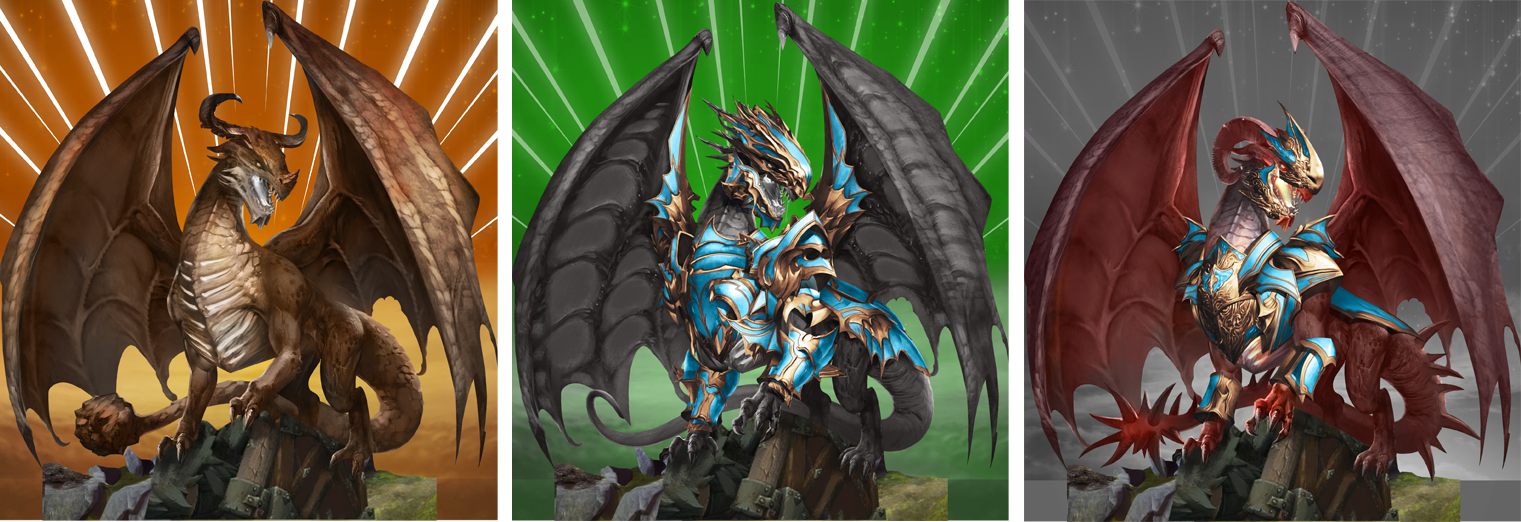 All the PvP fans will love the Arenas (https://drakewars.com/en/arena), where players will be able to duel with each other for resources and experience that are awarded for winning.
While dueling in the Arena, a dragon has over a billion chances of victory (or defeat).
All the PvP fans will love the Arenas (https://drakewars.com/en/arena), where players will be able to duel with each other for resources and experience that are awarded for winning.
While dueling in the Arena, a dragon has over a billion chances of victory (or defeat).
There's more: dragons can be sent on quests, thus collecting resources and recepes for creating talismans – items that help boost each dragon's body part.
Summing up, DrakeWars offers to the player a unique opportunity to test their economic and strategic skills while breeding, developing and modifying their dragon army.
If you love competition and want to keep everything you got in the game – welcome to DrakeWars. This place is for you.
https://drakewars.com/
DrakeWars is a browser economic manager in the dark fantasy setting with the elements of selection, collecting and competition.
The platform's key features is that it is the first free economic strategy, where the player is the only owner of the created and won in-game achievements, and is free to use them in any way they want. It means that everything obtained in the game can be: kept, updated and traded – both in the game and IRL!
The plot is set around dragons. Each dragon has a certain value. Players can collect dragons of all available kinds with individual coloring in the style of the elements: air, earth, water, darkness, light, and fire, with different kinds of armor and magical combat features that give the upper hand in the battle.
There's more: dragons can be sent on quests, thus collecting resources and recepes for creating talismans – items that help boost each dragon's body part.
Summing up, DrakeWars offers to the player a unique opportunity to test their economic and strategic skills while breeding, developing and modifying their dragon army.
If you love competition and want to keep everything you got in the game – welcome to DrakeWars. This place is for you.
«Can’t stop playing»
«Better with friends»
“The Outer Worlds is great at being good”
Enjoyed it, but won't go for a second playthrough
I have to recommend this game for it's concept alone! Equal parts puzzle arcade game and music maker. You play as a fisherman, who is also a DJ and your job is to catch the "Monomals" - these are little hidden musical creators. Each Monomal you catch is a different sound (drums, bass, lead) that you can use to create music. Finding Monomals isn't as simple as casting a line though. You have to complete puzzles in the form of moving blocks, finding the right paths, and collecting items...all while avoiding the bad guys.
Once you have a bunch of Monomals, you can enter the "Maker" mode. Here you to use the sounds of the different Monomals you've caught via a standard sequencer. The tools are impressive and anyone whose made any sort of music like this will feel right at home. You then compete with other DJ's who are also making songs with their Monomals.
My only gripe is how hot my phone gets when playing. No other game has demanded so much of my iPhone 11 Pro to the point that it gets this hot! Regardless, this is a game you _must_ try if you like making music and collecting animals.
Once you have a bunch of Monomals, you can enter the "Maker" mode. Here you to use the sounds of the different Monomals you've caught via a standard sequencer. The tools are impressive and anyone whose made any sort of music like this will feel right at home. You then compete with other DJ's who are also making songs with their Monomals.
My only gripe is how hot my phone gets when playing. No other game has demanded so much of my iPhone 11 Pro to the point that it gets this hot! Regardless, this is a game you _must_ try if you like making music and collecting animals.
«Blew my mind»
This review is as spoiler-free as it gets. I definitely recommend playing Prey with as little advance information on the specifics as possible, even if some things are obvious from the marketing materials alone.
Arkane Studios has a relatively specific niche; players explore detailed, intricately crafted spaces in a first-person perspective, using a variety of synergistic tools both intrinsic and extrinsic to their character, with a focus on reactivity and a living world. Even though it could be argued that this perception only came about with their first major attempt at it with Dishonored in 2012, effectively giving us exactly one example of their talents in making this kind of game, the pedigree of the creatives who work there and the sheer readiness with which Dishonored embodied and advanced the traditions of other games in that vein solidified their claim to it immediately. The fact that each follow-up to Dishonored (its DLC, and the sequel) managed to equal or even surpass it, was confirmation enough that this was their forte.
Prey, then, was a very interesting case in that it was the first time we'd seen the Arkane style applied to a new world, and though it was clearly still within the same niche, held different goals to the sneaky, magical power fantasy of Dishonored. Developed out of one of their two studios in Austin while the first worked on Dishonored 2 in Lyon, it took on the name of Human Head's 2006 shooter, Prey, as Arkane's parent company (Zenimax / Bethesda) owned the rights to that. I haven't played Human Head's Prey, but it seems apparent that Arkane's Prey doesn't have much in common at all. In fact, I suspect that a working title for Arkane's Prey would have been 'Psychoshock', since it appears to have more similarities with games like System Shock, and others that have adopted the '-shock' suffix.
The differences between Prey and Dishonored, then, are not so much about making a very different type of game as they are about using the same tools to accomplish different things, in a way that mirrors the use of tools in the games themselves. Dishonored's level-based structure uses Arkane's unique talent to develop spaces to give you a whirlwind tour of Dunwall and beyond, presenting the player with levels that provide individual challenges and allow for a self-directed pacing, while Prey's singular, interconnected area can feel cramped, and builds familiarity in a way that isn't present in Dishonored. Dishonored's singular objectives can be approached from a variety of ways, much like Prey, but where Dishonored gives you a single clear point to work towards, and a narrative with a solid structure, your goals in Prey are especially unclear at the beginning, and it takes some time before you have a full understanding of the 'bigger picture'.
These departures from Dishonored are largely because of Prey's different aesthetic goals; Prey begins in a similar state to a horror game, giving you a limited toolset, limited spaces to explore, and a limited understanding of the game's world. It makes you feel these limitations keenly, making a great first impression to work with later. As the game progresses, you start to push back these limits in various ways, exploring new areas with new abilities, until you've finally built yourself a very capable character. It gives the game a more traditional, character-dependent arc, but the consistent introduction of new elements keeps a playthrough from getting stale. These new elements are often very significant departures from one another, instead of just having bigger numbers to deal with, like many RPGs. In these ways, you're less embodying an existing character, like the Royal Protector of Dunwall or an Empress, and more building your idea of who your character is, now that you're in charge. It's a fun sense of progression that manages to keep the adrenaline going through much of the game, supported by the themes of the narrative, and the number of different twists the game's story takes.
The aesthetics bear this out, helping create a space that feels hostile, empty and lived-in all at once. You rarely have much in the way of verticality or freedom of movement, but as you learn the intricacies of the different abilities you have, and develop strategies, you also develop an understanding of the game's setting and location. The game's setting and aesthetics aren't just a coat of paint on top of the blocks making up a level, the architecture provides reactive elements and wildly varying structure to individual moments of gameplay. They're not just beautiful spaces, they're beautiful interactive spaces, that breathe history. The game's setting is fun to move around in and explore physically, sure, but it also rewards you for developing familiarity and understanding of what this place was, who lived in it, and what happened here.
A number of aesthetic traditions carry over from other Arkane games here beyond that. The game has plenty of diverse bodies in it, more than just depicting characters that belong to various different ethnicities. The protagonist's gender can be selected, and multiple queer relationships exist in the game. Music and sound is a high point, capturing a variety of emotions ranging from retrofuturistic hopeful sci-fi, to creeping dread, to the totally alien. The voice acting is all superb, and in true Arkane style, the voice credits are always surprising, in that they manage to rope in a handful of notable actors for relatively minor roles. Benedict Wong is an exception, lending his considerable talents to one of the main characters, but there are a couple of others you might've heard of, or seen before. Keep an ear out; or more likely, look at the credits when you've beat the game, and wonder how you didn't recognize the Academy Award winning actor who had a minor role as an sidequest NPC for all of five minutes.
All in all, while Prey owes a lot to its forebears, the inimitable talent of Arkane Studios means that instead of a rote recreation of something we've seen before like System Shock, we get a unique, modern story delivered in lavishly designed visual detail, anchored by some of the strongest emergent gameplay yet designed. Arkane has their niche, but as Prey proves, that's far from a limitation.
If you need more proof of that, Prey's Mooncrash DLC provides a single-player experience that's close to a roguelike, relying even more heavily on the procedural aspects that Prey championed over its predecessors. Where Prey holds the structure of a largely static set of goals, Mooncrash transforms that into an ever-shifting, laser-focused series of 'runs'. It's experimental (to a degree) and a very good time, though maybe not as endlessly replayable as they might have hoped.
Arkane Studios has a relatively specific niche; players explore detailed, intricately crafted spaces in a first-person perspective, using a variety of synergistic tools both intrinsic and extrinsic to their character, with a focus on reactivity and a living world. Even though it could be argued that this perception only came about with their first major attempt at it with Dishonored in 2012, effectively giving us exactly one example of their talents in making this kind of game, the pedigree of the creatives who work there and the sheer readiness with which Dishonored embodied and advanced the traditions of other games in that vein solidified their claim to it immediately. The fact that each follow-up to Dishonored (its DLC, and the sequel) managed to equal or even surpass it, was confirmation enough that this was their forte.
Prey, then, was a very interesting case in that it was the first time we'd seen the Arkane style applied to a new world, and though it was clearly still within the same niche, held different goals to the sneaky, magical power fantasy of Dishonored. Developed out of one of their two studios in Austin while the first worked on Dishonored 2 in Lyon, it took on the name of Human Head's 2006 shooter, Prey, as Arkane's parent company (Zenimax / Bethesda) owned the rights to that. I haven't played Human Head's Prey, but it seems apparent that Arkane's Prey doesn't have much in common at all. In fact, I suspect that a working title for Arkane's Prey would have been 'Psychoshock', since it appears to have more similarities with games like System Shock, and others that have adopted the '-shock' suffix.
The differences between Prey and Dishonored, then, are not so much about making a very different type of game as they are about using the same tools to accomplish different things, in a way that mirrors the use of tools in the games themselves. Dishonored's level-based structure uses Arkane's unique talent to develop spaces to give you a whirlwind tour of Dunwall and beyond, presenting the player with levels that provide individual challenges and allow for a self-directed pacing, while Prey's singular, interconnected area can feel cramped, and builds familiarity in a way that isn't present in Dishonored. Dishonored's singular objectives can be approached from a variety of ways, much like Prey, but where Dishonored gives you a single clear point to work towards, and a narrative with a solid structure, your goals in Prey are especially unclear at the beginning, and it takes some time before you have a full understanding of the 'bigger picture'.
These departures from Dishonored are largely because of Prey's different aesthetic goals; Prey begins in a similar state to a horror game, giving you a limited toolset, limited spaces to explore, and a limited understanding of the game's world. It makes you feel these limitations keenly, making a great first impression to work with later. As the game progresses, you start to push back these limits in various ways, exploring new areas with new abilities, until you've finally built yourself a very capable character. It gives the game a more traditional, character-dependent arc, but the consistent introduction of new elements keeps a playthrough from getting stale. These new elements are often very significant departures from one another, instead of just having bigger numbers to deal with, like many RPGs. In these ways, you're less embodying an existing character, like the Royal Protector of Dunwall or an Empress, and more building your idea of who your character is, now that you're in charge. It's a fun sense of progression that manages to keep the adrenaline going through much of the game, supported by the themes of the narrative, and the number of different twists the game's story takes.
The aesthetics bear this out, helping create a space that feels hostile, empty and lived-in all at once. You rarely have much in the way of verticality or freedom of movement, but as you learn the intricacies of the different abilities you have, and develop strategies, you also develop an understanding of the game's setting and location. The game's setting and aesthetics aren't just a coat of paint on top of the blocks making up a level, the architecture provides reactive elements and wildly varying structure to individual moments of gameplay. They're not just beautiful spaces, they're beautiful interactive spaces, that breathe history. The game's setting is fun to move around in and explore physically, sure, but it also rewards you for developing familiarity and understanding of what this place was, who lived in it, and what happened here.
A number of aesthetic traditions carry over from other Arkane games here beyond that. The game has plenty of diverse bodies in it, more than just depicting characters that belong to various different ethnicities. The protagonist's gender can be selected, and multiple queer relationships exist in the game. Music and sound is a high point, capturing a variety of emotions ranging from retrofuturistic hopeful sci-fi, to creeping dread, to the totally alien. The voice acting is all superb, and in true Arkane style, the voice credits are always surprising, in that they manage to rope in a handful of notable actors for relatively minor roles. Benedict Wong is an exception, lending his considerable talents to one of the main characters, but there are a couple of others you might've heard of, or seen before. Keep an ear out; or more likely, look at the credits when you've beat the game, and wonder how you didn't recognize the Academy Award winning actor who had a minor role as an sidequest NPC for all of five minutes.
All in all, while Prey owes a lot to its forebears, the inimitable talent of Arkane Studios means that instead of a rote recreation of something we've seen before like System Shock, we get a unique, modern story delivered in lavishly designed visual detail, anchored by some of the strongest emergent gameplay yet designed. Arkane has their niche, but as Prey proves, that's far from a limitation.
If you need more proof of that, Prey's Mooncrash DLC provides a single-player experience that's close to a roguelike, relying even more heavily on the procedural aspects that Prey championed over its predecessors. Where Prey holds the structure of a largely static set of goals, Mooncrash transforms that into an ever-shifting, laser-focused series of 'runs'. It's experimental (to a degree) and a very good time, though maybe not as endlessly replayable as they might have hoped.
«Underrated»