 Rate top games
Reviews
Display options:
Despite being an EA game it's pretty fun. I never played online or co-op, so I cannot vouch for that.
soooo stretched out, had a potential to be a fantastic game if devs would focus on making a let's say a ~15hr game like sleeping dogs, but seems like TakeTwo needed a big game so...
«Disappointment of the year»
A new take on the space horror genre - pitting you as the rogue AI rather than the humans fighting it - that absolutely drips atmosphere, but lives or dies based on how absorbed in it you can get.
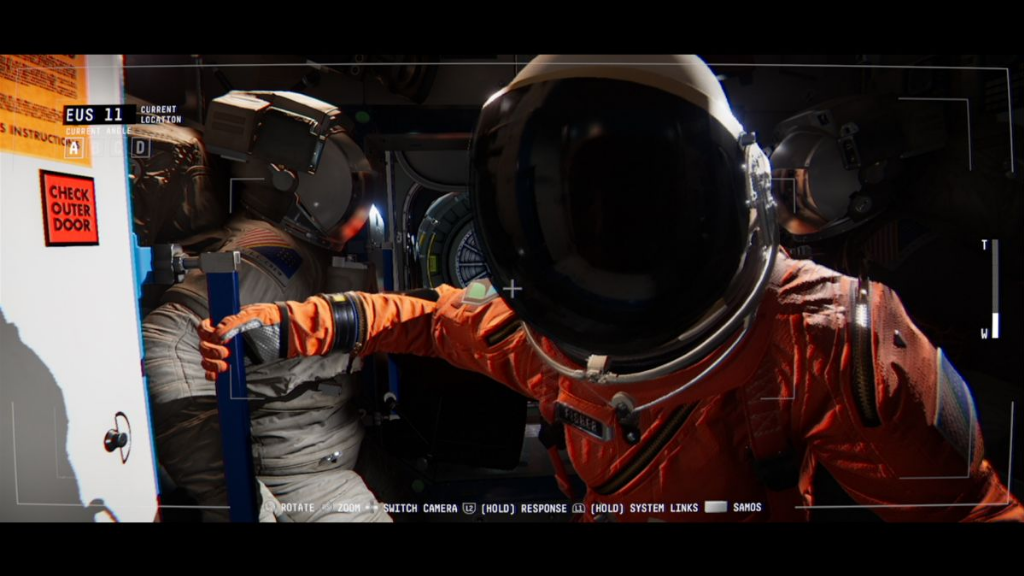 It's not a short game, clocking in at around 7 hours, but I'd nonetheless recommend trying to find time on a long night to play through it all in one sitting because it's difficult to get re-immersed if you come back to it mid-way through. Unfortunately though the game itself doesn't make that easy. About half of what you'll be doing as SAM - the System Administration & Maintenance AI - consists of interacting with various units in the space station and, not only is it sometimes unclear which one you need to complete your tasks, it's sometimes unclear if something's even interactable. Objects sometimes look interactive but have no prompt, sometimes they do have a prompt but activating it does nothing. This caused one particular occasion of frustrated wandering around to try and find the one thing I needed to interact with to progress, only to learn it was the Power Management Terminal that did nothing when I activated it half an hour ago and continued to do nothing until I reset the game. There was also a hard crash to desktop at the WORST possible time, mid climactic ending, that pretty much ruined the wrap-up of the game for me.
When not exploring the station the other half of SAM's duties are pop-up windows with - I'd hesitate to even call them puzzles - data entry tasks to activate various systems like re-routing comms and jettisoning modules. As the name of the game suggests, Observation is very light on the interactivity - if you're the type of person arguing that "walking simulators" shouldn't be classed as games this one probably isn't going to be for you - but it makes up for that with some stunning cinematography. Easily the high point of the game, the developers No Code have a real knack for creating powerful imagery and the design of Observation is up there one of my favourite space station designs in fiction. The only element of cinematography I found lacking was the not-quite-perfect transitions between cutscenes/gameplay and different environments. It might be that recent games like Ground Zeroes and God of War have spoiled me with their seamless camerawork but in a game like this where most of the cuts are from fixed camera angles it seems like a jarring omission.
The story Observation tells slowly unfolds at a pace that keeps it gripping throughout and, while the twists might hit as hard as intended, it ends strong by straddling that perfect line between over-explaining and leaving things too open to interpretation. It's just a shame it's bogged down by technical issues and the occasional tedious interactable hunting mission.
When not exploring the station the other half of SAM's duties are pop-up windows with - I'd hesitate to even call them puzzles - data entry tasks to activate various systems like re-routing comms and jettisoning modules. As the name of the game suggests, Observation is very light on the interactivity - if you're the type of person arguing that "walking simulators" shouldn't be classed as games this one probably isn't going to be for you - but it makes up for that with some stunning cinematography. Easily the high point of the game, the developers No Code have a real knack for creating powerful imagery and the design of Observation is up there one of my favourite space station designs in fiction. The only element of cinematography I found lacking was the not-quite-perfect transitions between cutscenes/gameplay and different environments. It might be that recent games like Ground Zeroes and God of War have spoiled me with their seamless camerawork but in a game like this where most of the cuts are from fixed camera angles it seems like a jarring omission.
The story Observation tells slowly unfolds at a pace that keeps it gripping throughout and, while the twists might hit as hard as intended, it ends strong by straddling that perfect line between over-explaining and leaving things too open to interpretation. It's just a shame it's bogged down by technical issues and the occasional tedious interactable hunting mission.
I really liked Gone Home, but I really REALLY liked Tacoma. By use of the holo-recording premise, the devs were able to take what worked best about Gone Home and create an even more intimate and dramatic experience for the player, while also having a lot of fun with what the actual role/perspective the player assumes in the story much like Gone Home. At its heart it's still a walking-sim, exploration-based game, but this game finds new ways to make the story more interactive and invite speculation/imagination.
It's also such a quick play, I would recommend to people who don't particularly enjoy walking-sims that love Sci-Fi as well.
It's also such a quick play, I would recommend to people who don't particularly enjoy walking-sims that love Sci-Fi as well.
«Blew my mind»
«Can’t stop playing»
The most fun I've ever had playing a shooter. You'd be hard-pressed to find another game that's as exhilarating and white-knuckle as Doom amongst the current FPS fair. Can't wait for the sequel.
«Blew my mind»
«Just one more turn»
I have really been enjoying playing this, but I can't say in earnest that I'd recommend it to anyone other than Life is Strange fans. The game does little to appeal to any first-time players, and without a time-travel mechanic, exploration isn't really necessary. From a story perspective, the thing that works the most is the romance between Chloe and Rachel, but if you have played the original you already know how that's going to play out, so most instances where you can utilize the new argument mechanic end up feeling futile -- again, exploration is unnecessary. The end result of this is that Before the Storm ends up playing more as an interactive movie than a game, and it's an interactive movie built exclusively for fans of the original. In this regard, I would call it a success, but as a game I'm not sure there's anything here that'll encourage any future replays. If I want to get my Life is Strange fix on, I'll probably go to the original or the new comic.
EDIT: Completed the full game and bonus mission. Again, I walked away really satisfied, but it really exists only as a companion-piece to the original. Play the original game first.
EDIT: Completed the full game and bonus mission. Again, I walked away really satisfied, but it really exists only as a companion-piece to the original. Play the original game first.
Shameless Halo re-skin with zero variety and zero player reward. Unfortunately I actually ended up playing half of the game XD. Occasionally you get a rush when the Star Wars music starts to play and some LAAT battleships fly above your head, but as a huge fan of the Prequels and Clone Wars I could not be bothered to ever finish it.
«Boooring»
Just recently replayed this game after a long time and fell in love all over again. What elevates this well above the other Telltale stalwart The Walking Dead is how effective this is as a mystery story. Obviously Telltale had already proven their strengths in this wheelhouse of narrative choose-your-adventure style gaming with that game, but simply put, a mystery story in the Telltale formula makes for a more effective game than a survival-type game. With the player in the role of detective, there is greater encouragement to explore every nook and cranny of a given room, navigate the many dialogue trees carefully, and there is greater urgency when being forced to pursue one lead over another.
Another stroke of genius (and I suppose 'Fables' architect Bill Willingham is owed credit for this) is that in true mystery fashion, everyone is a suspect, but as a player you actually already have a second-hand understanding of who most if not all of the characters are already. Just as Bigby has lived with his fellow Fables for hundreds and hundreds of years, you too have also known the characters since you were a child. Even though it is a fantastical world to buy into, your familiarity with it allows you to start off the game right away acting in a place of authority over the world of the game, and that is awesome. The game's finale also puts the critical eye over your entire play style, which is fantastic. While abusing your power doesn't always have immediate consequences, by game's end they can catch up with you. All in all, this is definitely the best mystery-style game I've played. Its simplicity trounces all over something like L.A. Confidential and make for a fun and rewarding gaming experience.
Another stroke of genius (and I suppose 'Fables' architect Bill Willingham is owed credit for this) is that in true mystery fashion, everyone is a suspect, but as a player you actually already have a second-hand understanding of who most if not all of the characters are already. Just as Bigby has lived with his fellow Fables for hundreds and hundreds of years, you too have also known the characters since you were a child. Even though it is a fantastical world to buy into, your familiarity with it allows you to start off the game right away acting in a place of authority over the world of the game, and that is awesome. The game's finale also puts the critical eye over your entire play style, which is fantastic. While abusing your power doesn't always have immediate consequences, by game's end they can catch up with you. All in all, this is definitely the best mystery-style game I've played. Its simplicity trounces all over something like L.A. Confidential and make for a fun and rewarding gaming experience.
«Blew my mind»
«Sit back and relax»
Much like just about every Final Fantasy game since FFX, XV fails to meet the expectations that fans had built during the absurdly long development process for this game. That being said, there is a lot to love here. Probably the biggest achievement is how much fun I had level-grinding. The game is at its best when you're marathoning side-missions for two-to-three days with no sleep, driving to new corners of the map in your monster truck Regalia, carefully planning out where you're going to stop to eat and stop to sleep so you can max out your EXP for level-ups. It's really simple, but really rewarding, and at the end of the day that has to do with strong gameplay, strong characters, and strong world-building, all things that can be said of the best Final Fantasy entries.
Side note: haven't played the most up-to-date version of the game, so I'm curious how much the changes to the story actually affect my overall enjoyment -- probably won't get around to playing it for a long time though.
Side note: haven't played the most up-to-date version of the game, so I'm curious how much the changes to the story actually affect my overall enjoyment -- probably won't get around to playing it for a long time though.
«Can’t stop playing»
«Sit back and relax»
I've spent far more hours than I'd like to admit searching for a game that fills my build-your-life itch. I played Harvest Moon: A Wonderful Life as a kid, but as I grew older its simplicity eventually kept me from playing it for more than a couple of weeks at a time. Stardew Valley had all the bells and whistles, but since I was looking for a game that completely captures you in a new life, a couldn't get past the graphics.
My Time at Portia not only ticks all the boxes for me, but fills some holes I didn't know existed. I find the bright animation enthralling, and always feel like I'm entering a better world. There is also always plenty to do in My Time at Portia, though there aren't hard deadlines for the most part, so you can take things at your own speed. The majority of your time is spent building commissions for the town and for individuals. In order to do this you need to collect various materials, both to upgrade your workshop and fulfill commissions. You collect most of the materials in mines. There are abandoned mines with a fairly standard "pick-axe-discovery" mechanism, as well as hazardous mines-- think extremely watered down Zelda dungeon. You could technically go full Harvest Moon/ Stardew Valley, raising animals and planting crops, but it would be a meager living. This didn't bother like I thought it might though. I found the exactly how I spent my time wasn't as important as where I spent it and who I spent it with.
And Portia is a great place to spend your time. The NPCs are fairly complex for the game, so I didn't have the same sensation of taking to the same mechanical, one-dimensional robots over and over again. The dating mechanism is fairly complex. Once you are friends you can ask someone out on a date, and if you date multiple people at once, you could even get caught!
There is so much to do in Portia that its hard to review it all. I'll just say that I find it a charming town and plan on going back time and time again.
My Time at Portia not only ticks all the boxes for me, but fills some holes I didn't know existed. I find the bright animation enthralling, and always feel like I'm entering a better world. There is also always plenty to do in My Time at Portia, though there aren't hard deadlines for the most part, so you can take things at your own speed. The majority of your time is spent building commissions for the town and for individuals. In order to do this you need to collect various materials, both to upgrade your workshop and fulfill commissions. You collect most of the materials in mines. There are abandoned mines with a fairly standard "pick-axe-discovery" mechanism, as well as hazardous mines-- think extremely watered down Zelda dungeon. You could technically go full Harvest Moon/ Stardew Valley, raising animals and planting crops, but it would be a meager living. This didn't bother like I thought it might though. I found the exactly how I spent my time wasn't as important as where I spent it and who I spent it with.
And Portia is a great place to spend your time. The NPCs are fairly complex for the game, so I didn't have the same sensation of taking to the same mechanical, one-dimensional robots over and over again. The dating mechanism is fairly complex. Once you are friends you can ask someone out on a date, and if you date multiple people at once, you could even get caught!
There is so much to do in Portia that its hard to review it all. I'll just say that I find it a charming town and plan on going back time and time again.
«Blew my mind»
«Can’t stop playing»
[b]Graphics/maps/textures[/b] Some maps has render issues or some minor bugs you can see through broken window but you can't shoot through. Some wall's don't have cover funcionality. Not from all surfaces rock bounce. Maps could be larger. Graphics acceptable while using GTX760 with Ultra/High settings
[b]Gameplay story(single player)[/b] Story just connects all missions. But do this game worth playing for a story? Nope
[b]Gameplay Multiplayer/co-op[/b] Didin't played long enough to have an opinion, will update later
[b]Music/Sounds[/b] How to know if you killed all enemies? Music become less intense...
[b]Controls[/b] Simple, but need to get used to inventory (Z,X), No hud which is nice
[b]Mods[/b] N/A
[b]Achievements[/b] You can't get all achievements without buying DLC's(11 missions in base game and +4 with DLC's)
for statistic click here v
This game has a lot of pros, but also a lot of cons.
Pros:
- The overall story is great
- Many (though not all) of the citizens are interesting
-The vampire abilities are pretty great and cool to watch
-Multiple endings
Cons:
-The side quest (so called "investigations") are simple fetch quest
-The map design is bad
-There is no fast travel, some maybe find this a good thing, but it can take a long time to reach each objective with such a bad and confusing map
-There are so many enemies that respawn constantly if you simply leave the area. Facing dozens of mindless NPCs just so you reach an objective can be very tedious
-The game is poorly optimized. There are fixes for certain issues online however.
This game's story got me at the first moment. I think it's kind of modern for some topics and it's a very good thing. The cast is very well made and all the possibilities take the game to a next level of quality. The way you enter the minds of the characters make this game one of my favorites.
«Blew my mind»
«Can’t stop playing»
I really loved this game. The story, the gameplay and the graphics are all on point. This game made me feel like I was in there, and gave me the right feels at the right moment. I think this game is perfect in its own way.
«Blew my mind»
«Can’t stop playing»
This is a hard one to review for me because on a technical level it's done well. The story for me is bland and took me to the 3rd chapter to feel engaged by it. As for the horror, it's made up entirely of un-inspired jumpscares which doesn't take long to stop being effective.
I can't help but feel disapointed by this one having loved the previous two titles.
«Boooring»
I'm kind of confused why co-op is such a highlighted aspect of this game in its store descriptions. It's a feature, for certain extra maps, but from what I played they weren't anywhere near as fun as the singleplayer game. Treat it like a tacked on bonus...
Cry of Fear's singleplayer campaign ranked pretty high up for me alongside games like Fatal Frame or Resident Evil 4. It's definitely a lot more lacking in polish, but not as much as you'd think for beginning as a HL1 mod. On the one hand, you have things like missed clicks in custom menus, but on the other the authors have gone so far as to completely replace HL1's ladder climbing system to better suit the feel of the game.
The writing is not excellent, but it covers the theme of depression; what is for many a sensitive and personal topic. It doesn't do it quite as well as masters like Silent Hill, but it's pretty respectful and may have even come from direct experience.
The game's length and variety, as well as its constant self-twisting of corridors and open areas, surprised me at times for when I was expecting a pretty basic game. This involves boss battles, many cutscenes, branching endings, and even a bonus mode after finishing the game. I remember consulting some guides to find my way through a few times, but others might enjoy the sprawling traversal. Be warned that there's not really many gameplay systems available for those who use too many resources at once (eg bullets) or who don't have extra saves on record in case something really bad happens. In many ways it's one of the more classic survival games.
Finally, a note on graphics and animation - obviously, they're out of date in today's age, but for a horror game, I think that actually works very well. Creatures that don't move quite "right" unsettle me perfectly, and maintained a consistent creepy vibe in the game.
«Beaten more than once»
Because of the central game mechanics, there's probably only a certain number of people The MISSING is really meant for. It's a puzzle platformer with a very stressing element core to all of its puzzles. There were definitely some times that puzzles felt kind of obtuse to me, most frustrating when they occurred in the middle of a high-paced moment and resulted in death, but they weren't so annoying as to bring down the whole experience.
The MISSING is a little bit disconnected from its own central story, as you can probably guess that the plot does not revolve around freak moose genetics. But it's still told well, with extra bonuses for collectibles by expanding more side conversations with J. J.'s other friends. Most of the real dialogue in the game comes through text conversations on J. J.'s phone. To me, this wasn't a big deal because it left some of the delivery of this information to the imagination (something I've been good with in Ace Attorney or Final Fantasy).
I felt like I had a pretty good handle on the meaning behind TMJJMATIOM's story, but I honestly had things wrong, which made recontextualizing things after the ending a very valuable experience. It feels unusual for such personal topics to be brought up by Japanese game developers in this way, which makes this game pretty valuable in my opinion.
«That ending!»
Forgotton Anne, like a lot of indie gems, has a fair number of missteps in terms of clunky gameplay, but it never vastly overstays its welcome with very basic platforming and some cool, consistently well-done puzzle mechanics. The game's main shine is in its art style and characters; and depending on how much you read into it, the theming of the story. You get a strong sense of each character in the game having their own worthwhile feelings behind their actions, and the excellent voice acting brings them all to life.
While the animations are of very high quality and may remind you of animated classics, occasionally there's a bit of reuse and not very many of the up-close cutscenes that exemplify them best.
There's a few important decision moments throughout the game, none of which affect the ending, but some of which actually had different consequences than I expected. They're not massively new moral choice situations, but it's no "Murder babies / sacrifice self to save a puppy" simplicity either.
The game's ending didn't give me a guttural immediate reaction, but it was definitely something I spent a bit more time thinking about after finishing it, and the relationship it has to the game's title. Afterwards the game also gives you access to a time machine to replay any segment of the game, which may help you find missed dialog or other extras.
«That ending!»
"In the face of overwhelming odds, I'm left with only one option. I'm going to have to science the s**t out of this."
I've described Near Death to some people as an excellent video game adaptation of The Martian; a story of a scientist alone in an incredibly lethal environment, fighting against all odds and incredibly poor luck to stay alive. It's definitely scary, in fact many other readers have tagged it as a Horror Game. But for once, it's really really cool to have a horror game in which camp-enthusiasts are not encouraged to laugh in jest at the weirdness of the tentacle-faced monsters you face. Near Death's only opponent is the cold - temperatures below 100 degrees celcius, and winds that have the power to turn a sprint into a 1-foot-per-second crawl.
Progress in the game involves a long series of fetch quests through the facility's many buildings. Any room without a total vacuum seal against the outside is freezing cold, meaning that sometimes your progress through buildings may have to be taken in steps, and some rooms have such large breaches that you'll need to rush your looting to avoid freezing.
The game is actually quite brutal just in the challenge of getting between buildings. Mercifully, you have a compass, but even with that, it's very easy to lose your bearings in such total darkness, and even high winds reducing your speed. You can redeem yourself by planning ahead and crafting light / rope poles to make return trips easier, but even these can go wrong. More than once I made a stupendous trek through the snow, found the building, got inside, only to find out that through my desperate run, I ended up at the wrong building (or, even, the back door of the building I had left from).
Sometimes, I thought "F*** it. The doors here are frozen over?? This turnout feels unfair. I want to give up. Kill me so I can go back to my last quicksave." But...something about the theming of the situation made me reconsider. I thought about moments in The Martian where Mark exhibits just about the same feelings. It made me want to turn those situations around. I knew I wouldn't reach the building I was aiming for, but I kept going, kept trying to recover my goals, because a person in this real situation wouldn't get a second chance. I certainly did die a few times, even playing on Easy Mode (I first tried Hard Mode, but found myself rushing so much to get warm / not waste kerosene I actually missed an important tutorial message - Easy still gave me much of the intended feel of the game)
Near Death is very short, so buy it if you tend to not have enough spare time to finish off most games in your Steam backlog, since you could very likely easily binge through it in one gaming session. I felt like it was unique enough and well-executed enough to be worth my time either way.
«Underrated»
Just completed final boss on main story with little extras.
Can I recommend it? Yes
Did I like it? Of course
Is it a good game? Well, kind of. It has very smooth combat, incredible art style and music, but storytelling through environment isn't that great. Hollow Knight did it better. Even Hob did it better in my opinion.
But if you want to play not that long beautiful pixel journey - you just have to play this game. What are you waiting for?
Can I recommend it? Yes
Did I like it? Of course
Is it a good game? Well, kind of. It has very smooth combat, incredible art style and music, but storytelling through environment isn't that great. Hollow Knight did it better. Even Hob did it better in my opinion.
But if you want to play not that long beautiful pixel journey - you just have to play this game. What are you waiting for?
«Just one more turn»
«Constantly dying and enjoy it»